Tuesday, April 5, 2016

St. Paddy's Day: One Final (Fishy) Dish

St. Patrick's Day has been in the rear-view mirror for weeks now...but we haven't had a chance to finish the series.

Blame it on pneumonia. Because that's what happened. 

At any rate, one more Irish dish is needed, to finish the menu:

Duncannon Fish Pie.


Think Shepherd's Pie, with a comforting layer of mashed potatoes blanketing the savoury contents inside. Since fish dishes were a traditional favorite on Fridays in many Irish households (the Catholic connection, of course), it might be a good choice for your table. Especially if you've just baked a salmon, and are wondering what to do with the leftovers. At any rate, this one-step main dish mixes in plenty of vegetables and is easy to make.

Hey, I resemble that!


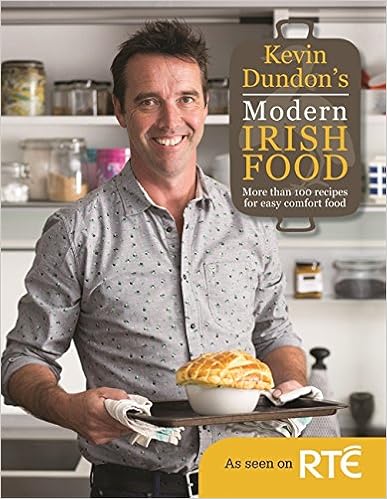
It's adapted from Kevin Dundon's Modern Irish Food -- a mainstay of this series.  Here goes:

DUNCANNON FISH PIE

9 oz each of smoked cod and haddock   (poached in milk, then gently flaked)
       OR substitute 1-2 cups of any firm-fleshed fish, including pollock and salmon
                  (Cook if needed; leftovers work just fine, flaked into small pieces - soak in a little milk)
4 1/4 tablespoons butter
1 onion, finely chopped
2 cups mushrooms, sliced
3 tablespoons flour
1/2 cup milk
1 teaspoon mustard
1 tablespoon chopped parsley
1 tablespoon lemon juice
salt and pepper

Topping:
8 potatoes (approx. 2 pounds), peeled and chunked
1/2 cup light cream
2 tablespoons butter
1/2 cup grated Cheddar cheese

Start the potatoes boiling -- they'll take about 20-25 min. to cook.
Meanwhile, poach the fish (6-8 min.)...or flake the leftovers...then set aside for now.

In a separate pan, melt the butter and saute the onions and mushrooms. When everything is nicely cooked, sprinkle the flour over, stirring, then gradually add the milk, stirring until thickened. (You're making a white sauce by doing this, by the way.) Add the rest of the spices, then gently stir in the fish. Pile everything in an ovenproof dish.

(Heat the oven to 350 degrees now.)

Drain and mash the potatoes, adding the cream and butter as you go. Spoon over the fish mixture, then sprinkle the cheese on top. Bake your fish pie for 20-25 min., until bubbling. Serves 4-6 hungry appetites.

Here's hoping your St. Patrick's Day was lovely!


  Next up:   Springtime Delicacies


Saturday, March 26, 2016

Thursday, March 24, 2016

Wednesday, March 16, 2016

St. Paddy's Day: Kinky Eton Mess

Happy St. Patrick's Day! Hopefully you're wearing green, putting away a spoonful of Dublin Coddle or two...and celebrating your Irish connections. (If you're lucky enough to have them.)

Today's recipe is a real mess -- an Eton Mess. Supposedly, it started out as an accident -- the original ingredients were part of a picnic basket that a dog accidentally sat on. Fortunately, the smashed-together ingredients were so delicious that the dog's owners had him regularly sit on picnic baskets from then on. (I hope not!)

Eton Mess started as a British dish...but the Irish have made it their own. This version comes from Kevin Dundon's Modern Irish Food. Dundon and his wife founded the Dunbrody Country House Hotel and cookery school -- but you may also know him from his appearances on television and radio.


His version: Kinky Eton Mess. ("Try it with the basil oil -- you won't regret it.")

KINKY ETON MESS

Meringue:  4 egg whites
1 1/4 cups caster (superfine) sugar    -- powdered sugar
1/2 tsp cornflour (cornstarch)
1/2 teaspoon white wine vinegar

Lemon Curd:  grated rind and juice of 2 lemons
 4 large eggs
2/3 cup caster (superfine) sugar
1 stick (1/2 cup) cold butter, cubed

The Rest (combine):  1 3/4 cups raspberries
1 1/2 cups strawberries, halved
juice of 1/2 lemon
1-2 tablespoons Basil Oil   (recipe follows - you'll want to make this ahead of time)

Heat oven to 250 degrees (120 degrees C). Line a cookie sheet with nonstick baking paper.

Beat egg whites until stiff, then add sugar, cornstarch and vinegar, a little at a time. Mixture should be glossy. Spread onto covered baking sheet -- bake for 1 hour, until meringue is firm to the touch, but still soft in the middle. ("I normally leave mine to cool in the oven with the door propped ajar.")

While meringue is cooling, mix all the lemon curd ingredients (except butter) in a double boiler over simmering water. Keep whisking until mixture thickens, then slowly add pieces of butter -- cook 10-12 min. until curd thickens. Set aside.

To serve:  Lightly break the meringue into uneven pieces, then layer with berry mixture and lemon curd in a clear glass bowl or four glasses. Serve and enjoy.

* * * * * *

BASIL OIL
1 pound basil
10 1/2 oz. flat leaf parsley
1 cup grapeseed oil

Plunge the herbs in boiling water for about a minute, then transfer them to a bowl of iced water for 3 min. -- this helps them keep their color and flavor. Dry lightly on paper toweling.

Put herbs in a bowl, then gradually drizzle in oil. (Use a handheld blender -- or do this, bit by bit, in a regular blender.) Once all the oil is added, let rest for 20 min. (thus "infusing" it). Push through a strainer or cheesecloth; resulting oil can be stored in refrigerator for up to two weeks.

* * * * * * * *

No time to fuss? Try a simpler version of this mess-y dish, inspired by the Irish Mess.

COLORADO MESS

1 pound strawberries, stemmed, cut in half, and lightly smashed
5-6 crumbled meringue, shortbread or macaroon cookies
whipped cream

Layer all three ingredients in four tall-stemmed clear glasses -- top with a fluff of whipped cream and chocolate sprinkles, if you want to be fancy-pants. Serve and enjoy.


Connemara, courtesy of Wikipedia

St. Paddy's Day: Burnt Oranges

In honor of St. Patrick's Day -- and partly because we've already given a number of the 'traditional' dishes (traditional for the U.S., especially) -- we've been searching for some of the more unusual Irish treats to share with you. 

This one has to top the list. 

It's Burnt Oranges -- a dessert that started as Bishop, a steaming punch flavored with lemon. Somewhere along the way, the flavoring changed to oranges, especially Seville oranges from Spain. And  it became one of the favorite dishes of Dean Swift. Jonathan Swift. Yes, the author of Gulliver's Travels and that lovely little essay, A Modest Proposal. (Click on the latter if you want to find out more -- but don't do it around suppertime.)

 Swift eventually became the Dean of St. Patrick's Cathedral in Dublin...for a while, anyways. Eventually he was buried there.

This sweet almost-drink, almost fruit soup, is actually quite delicious, and a good way to use up oranges heading past their prime.


BURNT ORANGES 

  • 4 large oranges or 6-8 Seville oranges
  • 150 ml sweet white wine (or a medium white wine if using eating oranges)
  • 4 tablespoons butter, sliced
  • 6 tablespoons sugar  (3 tablespoons x 2)
  • 300 ml fresh-squeezed orange juice
  • 2 tablespoons warmed Irish whiskey
Peel oranges with a peeler or sharp knife -- but just the skin, not the white part, which can be bitter. (This is called "zesting," by the way.) Cut zest into strips and marinate in the wine for a few minutes.
Zesting, zesting...

Pull the oranges apart into segments -- but get rid of as much white as possible. Discard seeds, but do it over a bowl, so not to lose any juice.
Put the oranges into an oven/stovetop-proof dish. Sprinkle with the butter and half of the sugar. Bake at 400 degrees F (200 degrees C) for 10 min., until the sugar caramelizes and oranges brown up.
While you're waiting, mix orange juice with the rest of the sugar; bring to a boil, then let simmer until thickened. Add the orange peel/wine mixture, bring to a boil again, then cook until thickened.
If the orange segments didn't brown, then broil them lightly. (Watch carefully - you don't want them to burn.) Warm the whiskey, pour over the oranges, and set the mixture on fire. (It won't flame if the whiskey isn't warm.)
Add the orange syrup and let the whole shebang simmer for about 2 minutes.
Serve right away -- or cold. "Pouring double cream over the cold version, in the Irish style, works very well."

Go here for the full scoop. 
    Recipe was adapted from Europeancuisines.com.


Jonathan Swift by Charles Jervas detail.jpg
Yum!   (Courtesy of Wikipedia)


St. Paddy's Day: Dublin Coddle

March winds are quite blustery around here. Now our stove insert is up and working, there's nothing nicer than a warm spot by the flames, and a plateful of the 'coddle' that's been simmering on top all day. This warm stew makes good use of bacon, sausage and winter vegetables. It can be made quickly, but needs at least a few hours of cooking to really bring out the flavors. If your fireplace is still on hold, try a crockpot or kettle, instead. 


DUBLIN CODDLE
(this version adapted from AllRecipes.com)

Dublin Coddle

1 pound Irish sausages (look for 'bangers,' or substitute breakfast sausage links)
1 pound bacon, chopped
1 pound potatoes, peeled and chunked
2 onions, chopped
6 carrots, chopped
1 cup of sliced mushrooms  (a cup or so of diced cabbage is good, too)
1 quart chicken stock
1 quart milk
salt and pepper to taste

Directions:

Saute your bacon until cooked; add onions and sausage to brown, as well. Drain off part of the bacon fat, then dump everything else in. Cook gently for at least 30 min. -- but for the best coddle, let it simmer for 2-3 hours, or 5-8 hours (on low) in a crockpot. Serve hot in large soup plates, along with a good beer.


St. Paddy's Day: Potato Farls

Warm and filling... these potato scones make good use of leftover mashed potatoes. The basic recipe asks for just potato, flour, butter, salt and pepper -- but I like to add some finely chopped onion, as well. (The word, by the way, comes from the Gaelic fardel -- or 'fourths.')

Serve underneath a fried egg, and with a pot of tea, for a substantial breakfast.

POTATO FARLS

1 1/2 - 2 cups mashed potatoes (warm in the microwave for 1-2 min. for best results)
1/2 cup flour
4 tablespoons butter
1 teaspoon each salt and pepper
1-2 chopped green onions (or 1/4 cup finely chopped white onion)

Mix all together to make a soft dough. (If it feels sticky, add a bit more flour.) Press out by hand into a rough-shaped circle, then cut into quartered wedges. Carefully transfer to a hot ungreased frying pan -- cook for 3-4 min. on one side, then flip and cook 3 more min. Keep warm in the oven while you fry the eggs. (Preferably pulled warm from underneath your chicken friends, down in the coop)

From the Guardian article about the subject: 
     Farls are most often served with a cooked breakfast or at teatime...at breakfast, try them topped with crisp bacon or served instead of fried bread...at tea time they are best served simply, with just butter and salt, but they are good too with dollop of jam. 
     At lunch or supper they go particularly well with smoked fish, grated beetroot salad and horseradish cream. Jane Baxter (my collaborator on this column) like them with butter and melted cheese, but she is a bad woman...

!!!

(Here's AllRecipe's take on potato farls.)

Irish Potato Farls


The Rock of Cashel, Cahir, County Tipperary, Ireland
Spend your vacation at this Irish castle -- go here for more.